Saddle Fit
Practical Dove Saddles guidance and information about saddle fit.
Tracings and Photos of Your Horse's Back
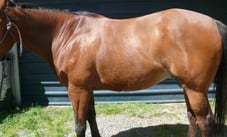
Firstly, we will require two photo shots to be emailed to us, so you need to have your horse on level ground, its head up facing forward, with a clear back (no cover on).
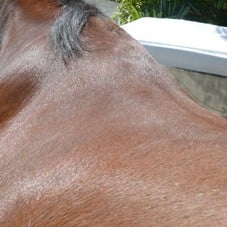
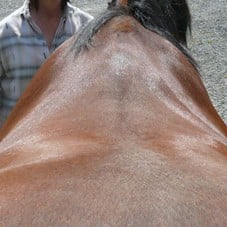
The first shot is a side view, and the second shot is of the back of the withers (you may have to stand on something for this shot).
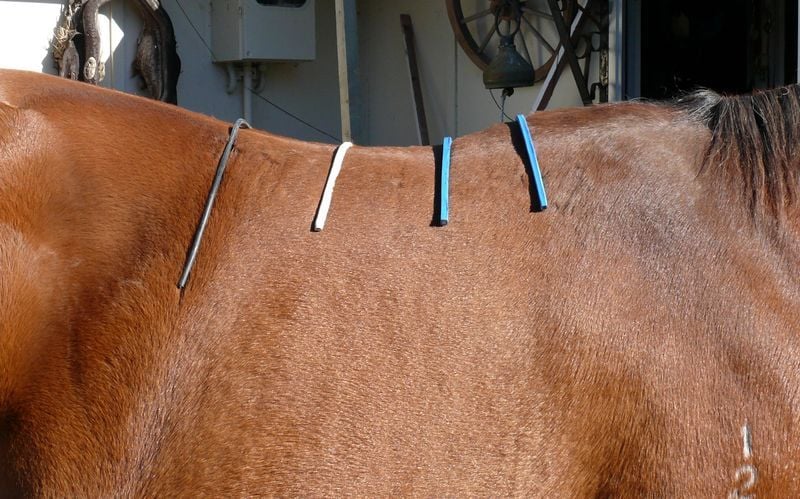
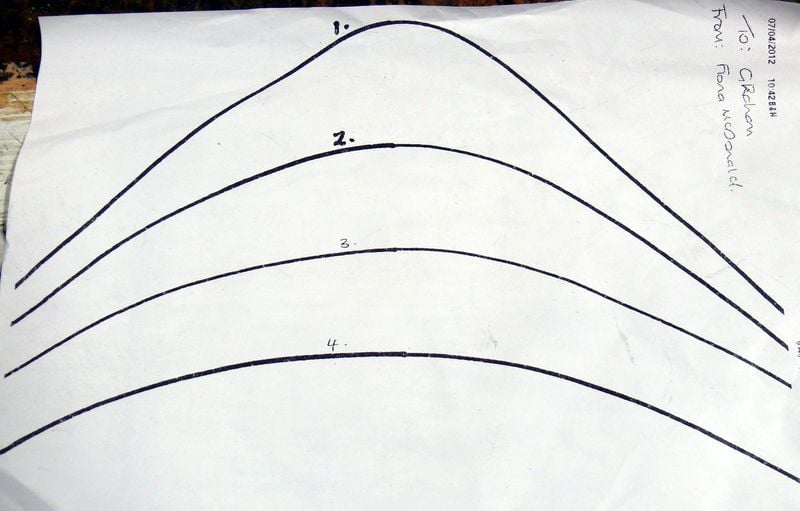
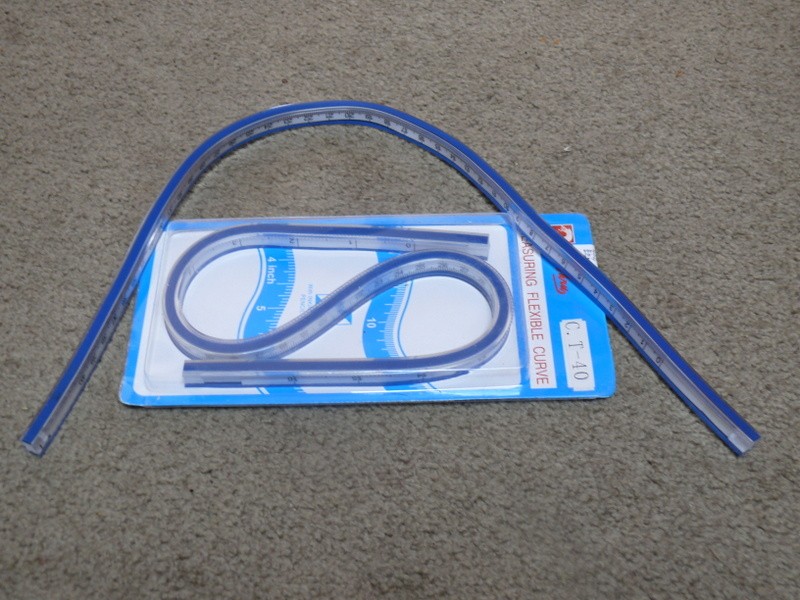
The next step is to trace four outlines of the back of the horse using a flexi-curve (you can purchase these from us; go to the bottom of the page). No more soft wire, please, as I have had too many false readings due to movement, and this will usually cost you in freight by receiving the wrong saddle or trees for fit. The first trace is over the wither, two finger widths behind the shoulder blade, keeping the flexi-curve upright (not on an angle).
Second trace: 4'' (100 mm) behind the first on the wither.
Third: centre of the back (about in front of where you sit), and finally:
Fourth: just about the end of the rib cage (about the loin area).
Now trace these four outlines, making sure you draw under the flexi-curve onto a single sheet of A4 paper. Scan the sheet and attach it via email for an under-tree fit. (Sorry, our fax service has been removed by the phone company.)
When you email them, make sure they are at full size, and please place an NZ coin, e.g. a 20-cent piece, on the sheet of paper when scanning. This is to check for the correct size when it comes through. Also, please put your name and your horse's name at the top of the sheet, along with your phone number and address.
Saddle Fit to Your Horse's Back
Please note—if you do buy a difficult horse to fit, such as one that is mutton-withered (almost no wither), downhill-backed (bum high), convex or has bunchy shoulders, is sway-backed, etc., and nothing off the shelf will fit, then you must be prepared to pay a bit more for a saddle to fit your horse, as custom work will be required in most cases. With these types of horses, we recommend our Try Before You Buy system. If you don't use this system and go ahead with a saddle, then you will have 28 days of trial for exchange or refund, less a 10% restocking fee on a returned, ready-to-sell saddle.
While fitting the saddle may seem difficult, there are some basic rules that will make sense.
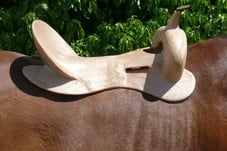
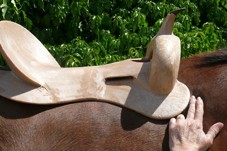
Firstly, the western saddle will sit back further than the English saddle. The front of the bars should be at least two finger widths back from the shoulder blade. However, some saddlemakers may differ regarding this position and prefer the tree closer to, or up on, the shoulder, but this will depend on the type of tree (to be on the shoulder, it must be a wider tree with more rock in the front bars). Although it is good to have the saddlemaker or fitter put some trees on the back of the horse to see which tree will best fit and the best position, this is not always possible, so the made-up saddle will have to be fitted. In my opinion, the world's best saddle fitter can't read the horse's mind, so we have to read its body language.
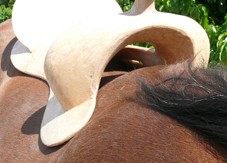
Using the white sheet test, put the saddle on the back in the right position, check the wither height and do the saddle up firmly (not too tight). When doing up the back cinch, do not do it up tight—just enough to be able to slip your hand between the horse and the cinch strap. Make sure you are using a girth connector strap to stop the cinch moving too far back or forward. Check between the sheet and the saddle at the front of the bars for how snug it might be, keeping in mind the extra thickness of your hand; e.g. what feels a little too tight might not be, due to your hand.
Next, while your hand is still between the front bar and the horse, ask the horse to step forward to feel for any finger pinch. Tightness will indicate more pinch. Also read the horse's signs of discomfort, either when on the ground or in the saddle. On-ground signs may include moving away from a badly fitting saddle that the horse has not been happy with, ears back or tail swishing. Please keep in mind that some horses tend to have habits of these traits, so they may not be a total indication of a bad fit.
It is also good to remember, when fitting a saddle to the horse, that if the back is still sore from a poorly fitting saddle, then even one that fits the horse may still hurt. Give the horse time to heal (a week or two, depending on soreness). If there is any visible damage, please consult your vet.
Once you are mounted, other signs to look for, besides the on-ground signs, are bucking when mounted and, once moving, the horse pulling the reins from your hands by lurching its head forward. This is a sign that the saddle is too tight in the shoulders. Another sign is short-stepping, where the horse can't step out due to restriction on the shoulders.
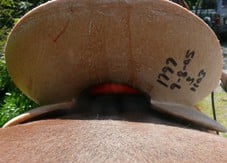
Also be aware of the back of the bars. Check that they are not pressing on the horse's hindquarters, for if there is pressure at the back and front of the bars, this is called bridging (not good). Sometimes the saddlemaker can build up the underside of the tree to remedy this, or you can have a special saddle pad (blanket) made for your horse to improve the situation; this is called shimming. However, nothing is better than having the saddle fit the back properly.
After you have finished your trial ride, there are two ways of testing for a good fit: one is the dirt test and the other is the sweat test. The dirt test will show more dirt colour in the areas of pressure on the white sheet. The sweat test is usually done after a longer ride, and I suggest you ride up and down hills and over the kind of terrain that you are likely to be riding.
Once back from the ride, remove the saddle and blanket to see if the sweat has an even pattern where the bars have been sitting. If it is wet along the length of the bars, this will indicate good contact. If there are any dry spots, say at the front of the bars, this usually indicates too much pressure. This is a sign that the sweat flow has been interfered with. Long-term, this will also interfere with blood flow, which can interfere with the hair follicles and result in whitening over the pressure area (long-term is usually permanent, like freeze branding).
Please note that some flat, dry spots can be a borderline indication of a near-good fit, and a good pad may help the fit, such as my shoulder-relief pads. Whereas, if the hair is disturbed (ruffled up), this is a serious bad-fit problem.
I hope this has helped in some way with understanding good saddle fit. Although one could write a book on the subject, which I'm sure many have, hopefully this is at least a shorter guide to saddle fit. If more information is required, you can go to YouTube and search for how to fit a western saddle.
Position For Flexicurve
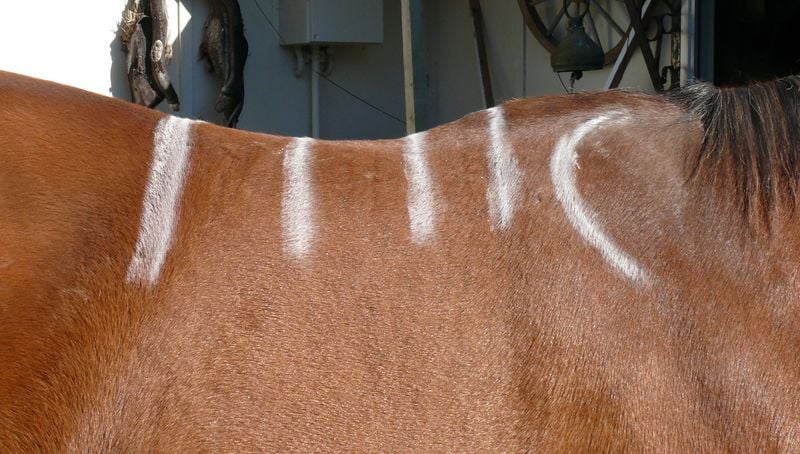
Position of Chalked Back & Shoulder
In a straight-up position (as in the photo), please chalk your horse's back so we can determine the correct position from your lines. If you do not do this, then we can only presume you have done it correctly, and we will be building the saddle from these tracings, which you are responsible for.
Back tracings: put these on one piece of A4 paper, preferably sideways, and email them through. Do this at full size only (do not downsize them, please), although you may downsize your horse photos.
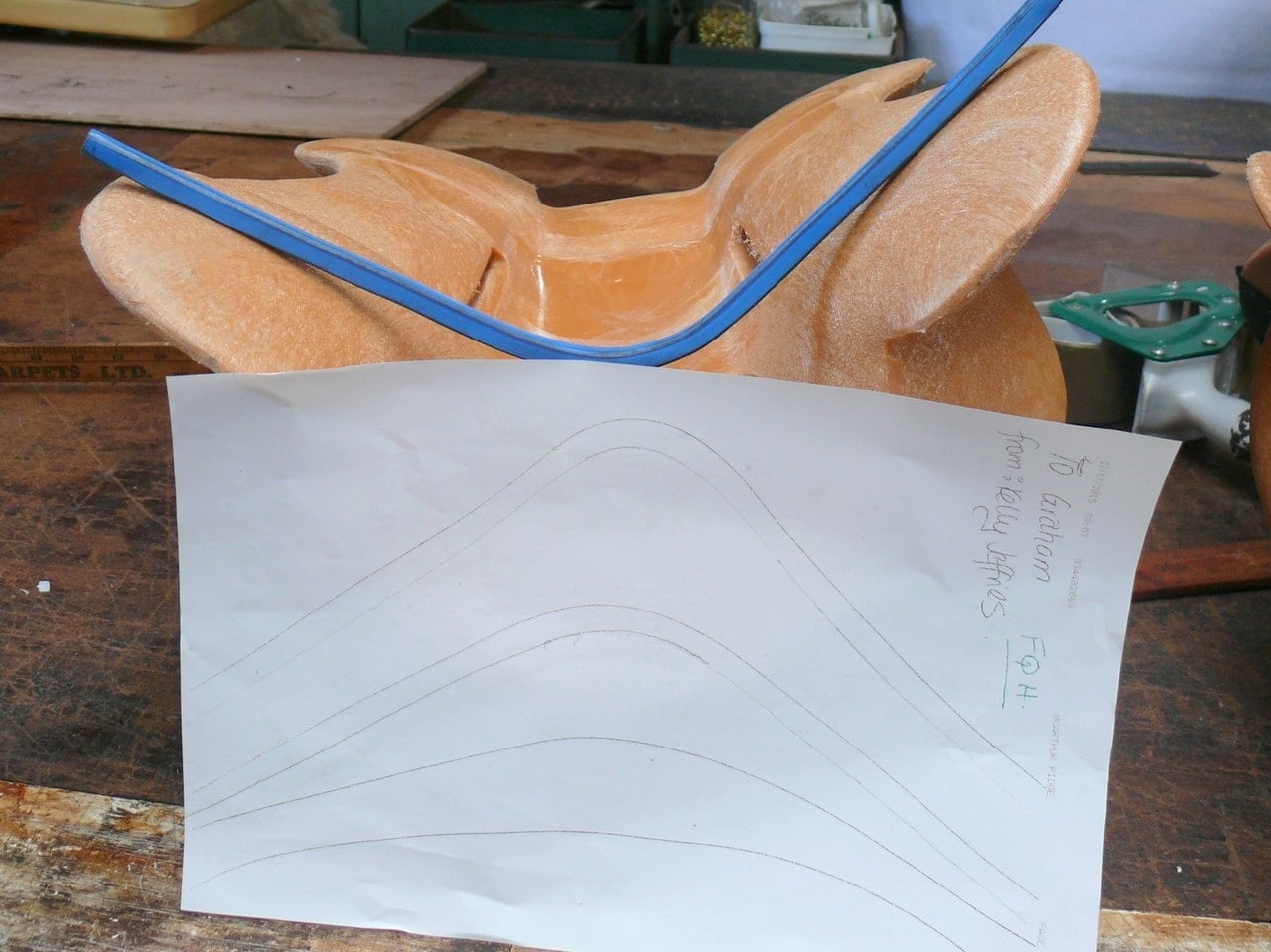
Flexi=Curve to tree Gullet
Once we have your horse's back tracings, we copy these from your sheet to our flexi-curves, then match them at four points to a tree or trees that will best fit your horse. We are looking for flare clearance and contact.
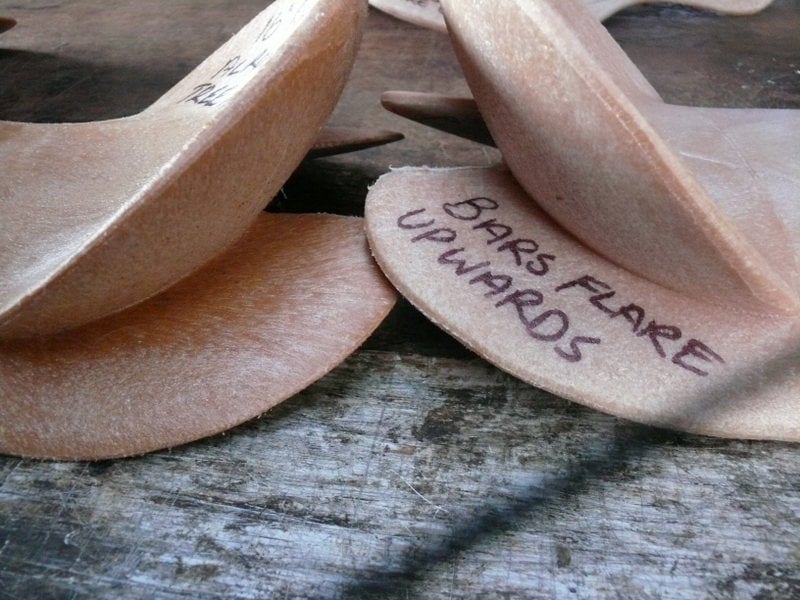
Different Back bars Flares
This shows the differences in back-bar flare between two similar Allrounder trees, only available in semi-to-standard Q/horse fits. The back bars that have higher flare will fit a sway-backed or bum-high horse.
Flexi-Curve Rule
These can now be purchased from us, with inches and centimetres marked on the 24'' (60 cm) flexi-curve, at $25 posted. The 24'' flexi-curve may be needed if your horse has an unusual back line from front to back, and it can be traced in two parts from alongside the spine on the same sheet.